Thursday, May 15, 2014

Japanese Honeysuckle (Lonicera Japonica)

Japanese Honeysuckle would grow abundantly in my yard if we let it run it's course. It was introduced to the United States as early as 1806 a while before my state Alabama was granted statehood (1819). It was brought over from Japan and is hard to imagine a time when it would not have been here at all. The fragrance can easily remind me of my childhood summers... Those years have long past but the smell of the honeysuckle returns each year. When researching this I didn't know there were so many varieties of honeysuckle and as many as 20 of those varieties that are native to North America and Europe. Of the 100's I discovered though all are not edible. The nectar from the Japanese Honeysuckle can be sucked without harm and young leaves can be boiled to make tea. Do not eat the berries or the vine though ! It is also said to be medicinal and is high in calcium, magnesium and potassium. As for myself I'll probably just enjoy the fragrance it adds and thank God for another of His creation growing in my backyard .


Japanese Honeysuckle (Lonicera Japonica)

Japanese Honeysuckle (Lonicera Japonica)

Japanese Honeysuckle (Lonicera Japonica)

Japanese Honeysuckle (Lonicera Japonica)

Sunday, May 11, 2014

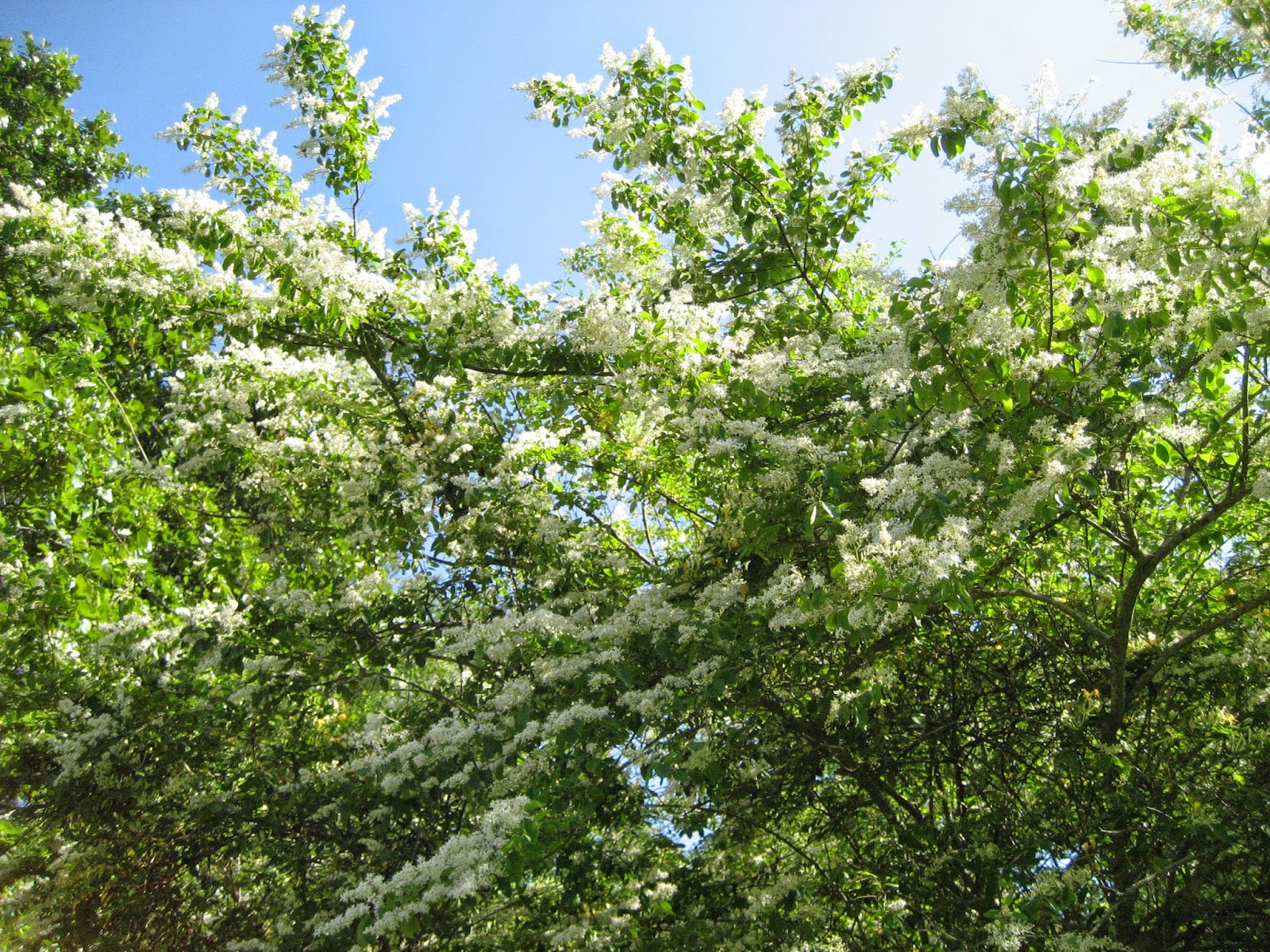
Chinese Privet (Ligustrum Sinense Lour)

Chinese Privet or Sweet Shrub as I have called it for years is filling my yard with a lovely fragrance. Although Sweet Shrub is not it's name but it sure brings a sweet fragrance around this time of year. It was brought to the United States in 1852 as an ornamental shrub and is native to China. If you don't constantly cut and trim it you will soon have a tree ! That's what now grows in between my neighbor's yard and ours a row of once shrubs now become trees! The flowers are beautiful though and the fragrance is nice. It grows wild and spreads quickly and in some spots can be a nuisance ! 
Some still use it as a hedge and my Mother called it a poor man's fence . She grew up seeing it used that way and it is not uncommon to still see it so. 
It's fruit is not edible and can cause nausea, headache, abdominal pain,vomiting, diarrhea, weakness, low blood pressure and body temperature.  Although it is said to have been used in Chinese medicine for over a 1000 years! With modern research showing it can increase white blood cell count. Not sure if medicinal uses and research is for this member of the privets or others. Information of God's creation is continuing to grow from my own yard . Maybe growing as quickly as the Chinese Privet grows here beside us. 
Chinese Privet (Ligustrum Sinense Lour) The bees love these blooms .

Chinese Privet (Ligustrum Sinense Lour) The bees love these blooms  and are buzzing all around them.

Chinese Privet (Ligustrum Sinense Lour)

Chinese Privet (Ligustrum Sinense Lour)

Chinese Privet (Ligustrum Sinense Lour)

Chinese Privet (Ligustrum Sinense Lour)

Saturday, May 10, 2014

Bird's Eye Speedwell (Veronica Persica)

Bird's Eye Speedwell is a small herb or (weed to some) that's had a place in my yard for a while. For years I didn't consider it significant but now I do. It has pretty blue flowers no bigger than an eraser on a pencil. In 1825 it was first recorded in Britain and has since spread throughout the United States. Bird's Eye Speedwell is edible and it can be eaten raw or cooked. It can also be used in teas. It contains tannins, resins, sugars and organic acids. It has been used medicinally to reduce congestion in the respiratory tract and in treating other disorders. So much information is available of yet another discovery of God's creation in my own backyard. 
Bird's Eye Speedwell (Veronica Persica)


Bird's Eye Speedwell (Veronica Persica)


Bird's Eye Speedwell (Veronica Persica)

Wednesday, May 7, 2014

Pink Evening Primrose (Oenothera Speciosa)

Today let's discover His Creation and the benefits God has given to us through Pink Evening Primrose.  Pink Evening Primrose (Oenothera Speciosa) has really spread in our backyard since the 1990's when my son and mother pulled some up to plant. They would walk in our neighborhood and would see it growing wild on the side of the road. It didn't seem like at first it survived the transplant but the next year it appeared and every year since then continued to multiply. There's no lack of it now and it's really beautiful . Only last year did I discover that it's edible and the Oenothera species have been used as antioxidant and antitumour agents due to their high content of flavonoids and tannins .
The Evening Primrose pictures were taken from my yard as all pictures I share with the blogs .
Pink Evening Primrose (Oenothera Speciosa)

Pink Evening Primrose (Oenothera Speciosa)

Pink Evening Primrose (Oenothera Speciosa)

Pink Evening Primrose (Oenothera Speciosa)

Pink Evening Primrose (Oenothera Speciosa)

Pink Evening Primrose (Oenothera Speciosa)


Tuesday, May 6, 2014

Sweet William ( Dianthus Barbatus )

I made a new discovery today of a lovely flower I didn't know was edible . There hasn't been much research of medicinal uses but it adds a lovely touch to cakes and other things. 
Birds, bees and butterflies are also attracted to the nectar and I'm attracted to the beautiful colors. Today has been a good day in discovering  God's creation.  


Sweet William ( Dianthus Barbatus )

Sweet William ( Dianthus Barbatus )

Sweet William ( Dianthus Barbatus )
  

Saturday, May 3, 2014

Wild Rose (Rosa Multiflora) Japanese Rose

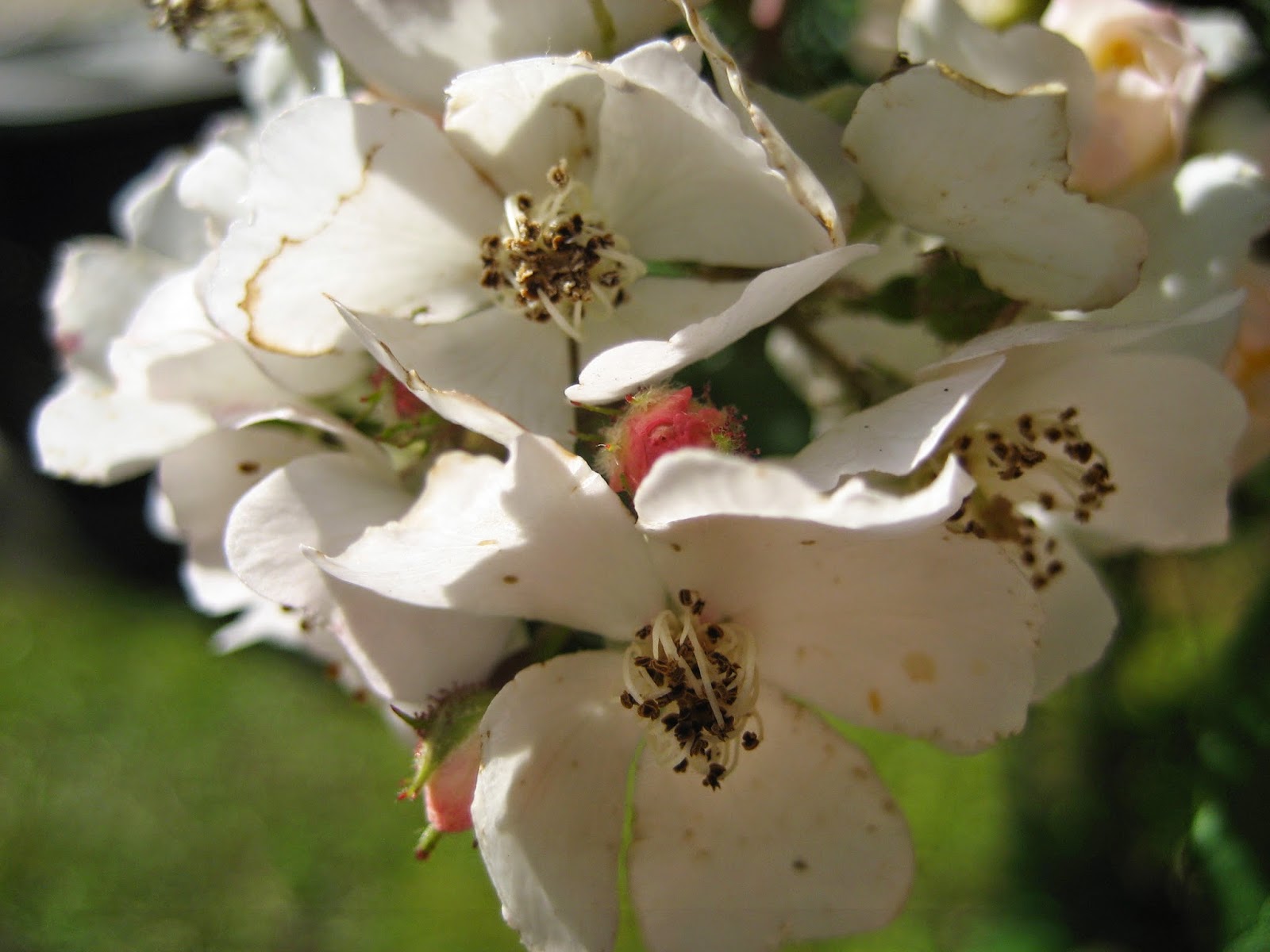
As I walked around the side of the house this morning the fragrance and beauty of the wild rose caught my attention. It's just beginning to bloom with small white and pinkish buds. It's hard to keep up with how quickly it grows and would soon take over the whole side of the house if allowed to. This year I've kept it cut back so it was manageable. This rose is not native to the United States but was brought over in 1866 thus how we get the name Japanese Rose. It originates from Japan, Korea and China. It is edible, nutritious and it contains vitamin C, A and E. You can eat the young leaves and shoots raw or cooked. There are a layer of hairs around the seeds that you should remove. It can cause irritation in the mouth or digestive tract. The rose hip (that small fruit) is so tiny but is very beneficial to us.Take some time to discover the things growing around you. The discoveries may surprise you. Today is a beautiful day and a beautiful day to discover God's creation. That's just what I'm doing in my own back yard !
Wild Rose (Rosa Multiflora) Japanese Rose 

Wild Rose (Rosa Multiflora) Japanese Rose 

Wild Rose (Rosa Multiflora) Japanese Rose 

Wild Rose (Rosa Multiflora) Japanese Rose 

Wild Rose (Rosa Multiflora) Japanese Rose 

Thursday, May 1, 2014

White Clover (Trifolium Repens )

I can remember as a child looking at the clover growing in my yard. It never crossed my mind that it was edible both leaves and flowers. I think I might have been searching for four-leaf clovers back then. Many years have past but white clover still remains in my yard. White clover is high in protein, contains beta carotene, vitamins b and c. It also contains biotin, choline,  inositol and bioflavonoids. A word of caution though clover in warm climates can produce small amounts of cyanide they say. Well living in the South I guess you could say that I'm in a warm climate but I have tasted white clover . I tried small amounts and it did not make me sick. I also thought the taste was good. Discovering His Creation for me is a joy ! Ask the Creator what He wants you to discover today.