Monday, February 16, 2015

Daffodil ( Narcissus pseudonarcissus )

The bright yellow Daffodils are in bloom in our yard now. They're a reminder to me that Spring is not far off. Although it's still somewhat cold here but February seems to be flying by. I'm looking forward to the Spring days and warmer weather ahead. These flowers send dashes of yellow joy throughout our yard and are a blessing to see especially on grey cloudy days. They are lovely to look at but not to be eaten ! They can cause severe vomiting and contain toxic alkaloids. Despite that bulbs and plant are poisonous it still has had medicinal uses and is being studied in the treatment of Alzheimer's disease. Galantamine which is found in the bulbs is extracted and used for this treatment. Other research is being done in it's uses in treating depression and a Chinese study using Daffodil compounds to kill off cancer cells. The Daffodil are native to Northern Europe and have been widely cultivated here in North America. I'm glad my mother added these to our yard many years ago and that God has been teaching my about the creation He placed here on the earth. I am such a novice and so much to learn about the creation around me. I hope you'll take time to enjoy and discover God's creation where you are too. 


Daffodil ( Narcissus pseudonarcissus )

Daffodil ( Narcissus pseudonarcissus )

Daffodil ( Narcissus pseudonarcissus )

Daffodil ( Narcissus pseudonarcissus )

Daffodil ( Narcissus pseudonarcissus )

Daffodil ( Narcissus pseudonarcissus )

Friday, January 30, 2015

Purple Deadnettle, Purple Archangel- (Lamium purpureum)

Purple Deadnettle, Purple Archangel- (Lamium purpureum)
Purple Archangel is growing here in Alabama even now during January. It can be found scattered about my yard and will be more abundant in the Spring. The name Archangel was given to it because of it's appearing around the time of year that the Feast of Dedication to Archangel Michael was had. A tradition from the Catholic Church. The date was historically April 27 but later changed to May 11. Purple Archangel is native to Europe and Asia and said to be an invasive species here in North America. It can be found throughout most of the United States and parts of Canada. It's not just a weed to be shunned though. It's edible and can be eaten raw or cooked. Leaves and flowers make a nice addition to a salad. It's one of the first wild edibles I actually tasted from my yard. This plant is sometimes called Deadnettle. It's not like Stinging Nettle in that the hairs do not sting or bring discomfort if come in contact with. Thus the name Deadnettle. I promise if it they did sting I wouldn't touch it ! It has been said to be anti-inflammatory and antimicrobial. The leaves can be applied to cuts or wounds. It also contains flavonoids and is said to be rich in iron and vitamins. Remember as always to have many resources and much information before trying or using any plant medicinally. Having the advice of an expert could also be needed. I have been learning so much in just a short time about the plants that are in my yard and area. I hope you'll take time and discover the Creator and His creation where you are. 

Purple Deadnettle, Purple Archangel- (Lamium purpureum)

Purple Deadnettle, Purple Archangel- (Lamium purpureum)

Purple Deadnettle, Purple Archangel- (Lamium purpureum)

Purple Deadnettle, Purple Archangel- (Lamium purpureum)


Purple Deadnettle, Purple Archangel- (Lamium purpureum)

Purple Deadnettle, Purple Archangel- (Lamium purpureum)


Monday, December 29, 2014

Leatherleaf Mahonia (Mahonia bealei)

This evergreen shrub I saw during the summer as my son and I would take pictures on the trail behind our house. I actually thought it was holly but after some research discovered it wasn't at all. Leatherleaf Mahonia is native to mainland China but can be found in the wild throughout the Southeastern United States. It came to this country sometimes in the 1800's. It can grow 5 to 10 feet tall and is an invasive species. There are bright yellow flowers that bloom but as you can see in the pictures these have not opened yet. It's still winter and yes they bloom during this season. Only small buds are on there now. The fruit of this shrub is said to be edible and some make jellies from them. They also contain vitamin C but are full of seeds too.The berries will ripen sometime in the Spring. The leaves, roots and stems have been used medicinally. It is said to be Antibacterial, Anti-phlogistic, Anti-rheumatic, Anti-cancer, Depurative, Febrifuge and used as a Tonic . There are no known hazards but always be cautious and well informed before trying any plant as an edible or using them medicinally. Have expert advice and many resources to gain knowledge from. I love discovering God's creation and it amazes me what I've found in my little world. I hope you'll take time to discover what the Creator placed where you are.

Leatherleaf Mahonia (Mahonia bealei)

Leatherleaf Mahonia (Mahonia bealei)

Leatherleaf Mahonia (Mahonia bealei)

Leatherleaf Mahonia (Mahonia bealei)

Leatherleaf Mahonia (Mahonia bealei)

Saturday, December 13, 2014

Eastern Red Cedar (Juniperus virginiana)

There are about 3 Eastern Red Cedars growing in our yard. They are large now but I can remember when they first began to grow. The one in the front yard grows next to a Sweet Gum tree and for some reason it was never pulled up. At one time we would decorate it with lights for Christmas. Now it's too big to try that. Some Eastern Red Cedars are grown and used for Christmas trees. It is native to and can be found throughout the Eastern United States and Canada. It was first observed in Roanoke Island, Virginia in 1564. The colonists used it for building furniture, cabins and fences. Birds and small animals eat the tiny blue fruit. They look like berries but they are cones and indicates the female tree.  The Eastern Red Cedar is not considered a true cedar either but is in fact a member of the Juniper family. It can grow to a height of 40 or 50 feet. The oldest Eastern Red Cedar is in Missouri and is said to be 795 years old ! In 2012 it became the state Evergreen tree for Tennessee. Native Americans used the berries in cooking and medicinally. It's still used in herbal medicine as a tea sometimes to treat coughs, respiratory conditions, bronchitis and as a antispasmodic. It's also used in treating pains, arthritis and as an antiseptic and more. It's said to be an anticancer agent called podophyllocotoxin.  The berries can be somewhat toxic though as other parts of the tree. Eating large quantities can cause diarrhea. Always remember to be cautious and well informed with many references before trying or using any plant medicinally. Other uses include moth repellent, insecticide and an essential oil can be obtained from the wood. The Eastern Red Cedar is just another discovery of what's in my yard and area where I live. I hope you'll take time to discover a magnificent Creator and His magnificent creation where you are. 

Eastern Red Cedar (female) (Juniperus virginiana)

Eastern Red Cedar (Juniperus virginiana)

Eastern Red Cedar (Juniperus virginiana)
Eastern Red Cedar berries called cones (Juniperus virginiana)

Eastern Red Cedar (Juniperus virginiana)

Eastern Red Cedar berries or cones (Juniperus virginiana)


Eastern Red Cedar (Juniperus virginiana)

Eastern Red Cedar (female) (Juniperus virginiana)

Sunday, December 7, 2014

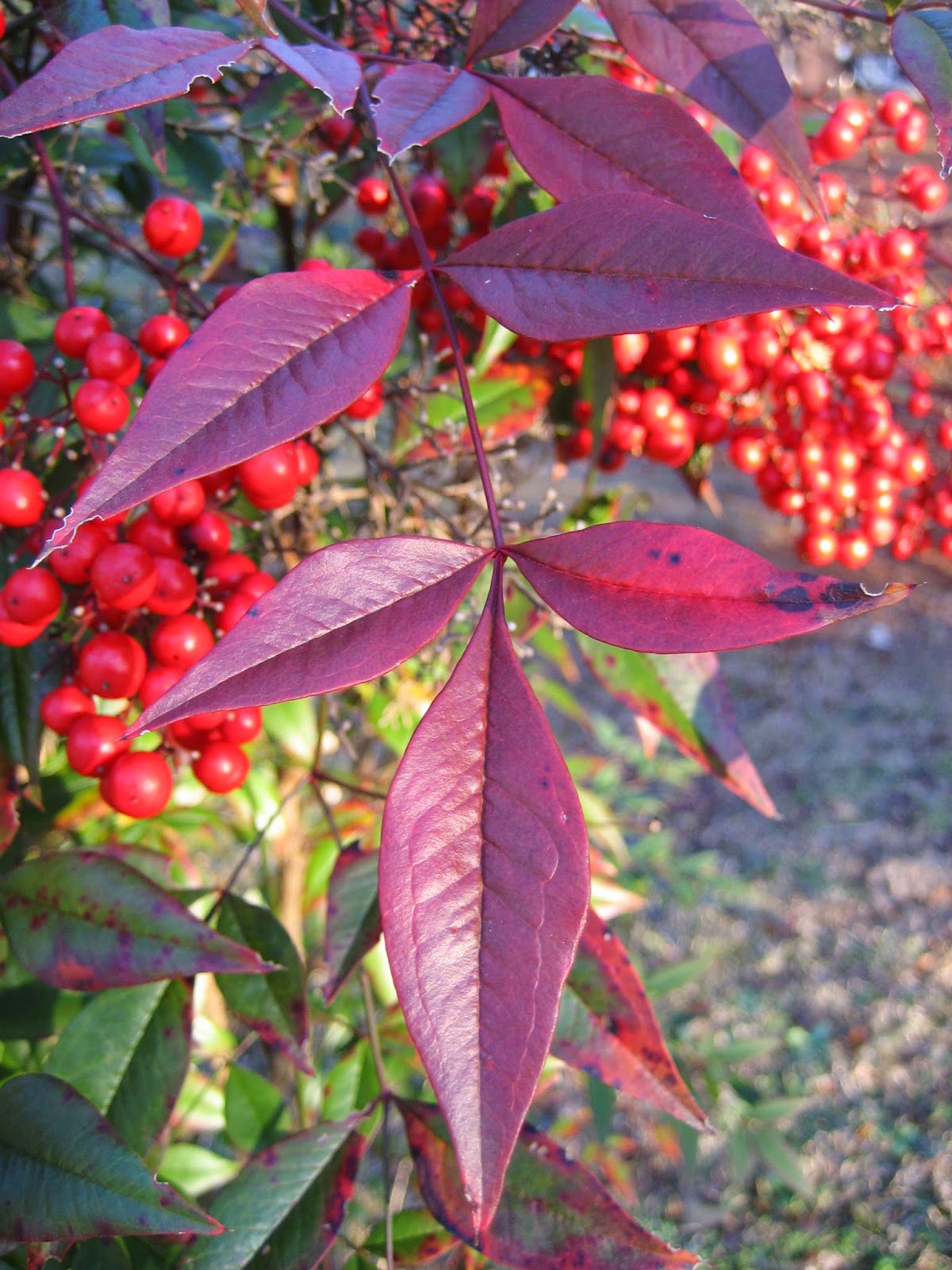
Nandina (Nandina domestica)

This Nandina shrub wasn't here when we moved in during the 1970's. Back in the 1990's my Daddy dug it up from the woods and we transplanted it to our yard. I later moved it again to where it's been now for a good many years. This evergreen shrub has beautiful red berries that always catch my eye this time of year. They remind me of the Christmas season. Nandina is native to Eastern Asia from the Himalayas to Japan. It was said to have been in the United States by the early 1800's and has become naturalized in the Southern United States. The berries can be toxic to cats and some grazing animals I've read. It's said to only cause low toxicity but the berries do contain alkaloids. One is nantenine. Nantenine is being used in research as a antidote to MDMA. My mother says she ate these berries as a child and didn't become sick eating them. She didn't eat large quantities but would eat a few at a time. She had no remembrance of feeling any different either. Most information I find lists them as nontoxic to humans. Although I have read that they were toxic. A little confusing right? Other parts of the plant also contain hydrocyanic acid which could be fatal if ingested. Interesting that hydrocyanic acid has been used in fumigating. Maybe we need more information then since there's some confusion over this shrub. I never see birds eating these berries and read there are studies saying it was harmful to them. In fact am I back to the question of toxic berries ? As for myself I don't think I want to try them if they do contain cyanide. Remember to be cautious and well informed. Have reliable expert information before trying any wild edible. Even in colder weather there are still so many things for me to discover about God's creation here. I hope you'll take time to know the Creator of everything and take a look around to discover His creation where you are. 
Nandina (Nandina domestica)

Nandina (Nandina domestica)

Nandina (Nandina domestica)

Nandina (Nandina domestica)


Nandina (Nandina domestica)


Nandina (Nandina domestica)


Saturday, November 1, 2014

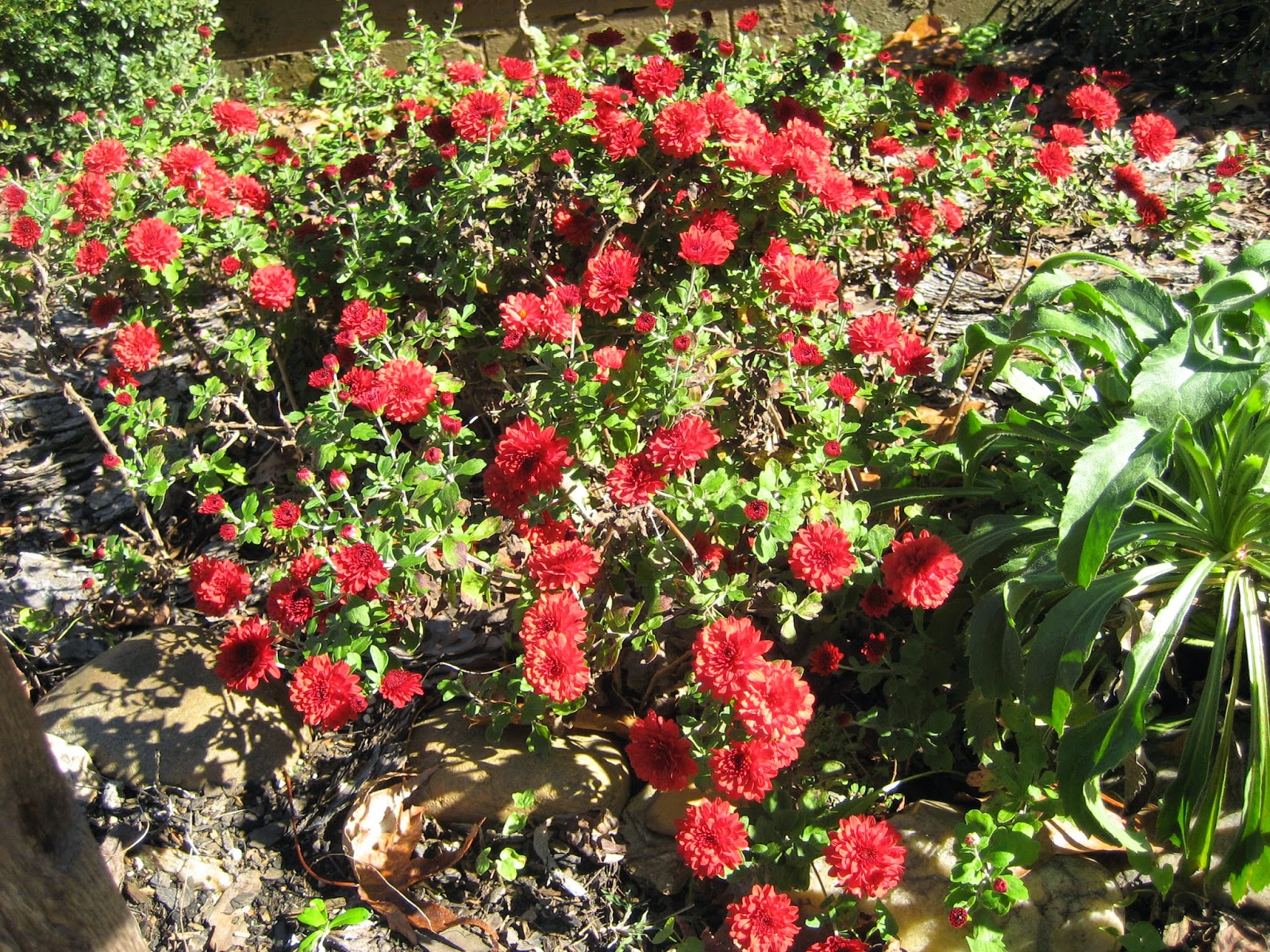
Mums (Chrysanthemum)

These Chrysanthemums have been in my front yard for a while. My mother planted them there and they are beautiful to look at in the fall. Although I know them when I see them and I knew their name I'm discovering more interesting facts about them. They are native to Asia and Northeastern Europe. Chrysanthemums were first cultivated as far back as the 15th century BC in China as a flowering herb. They were imported from England to America in 1798 and in 1884 California was first to grow them as the Chrysanthemum industry began here in the United States. The Chrysanthemum is a symbol of the Emperor and the Imperial Family in Japan. I was a little surprised that about 200 years ago people in central Asia discovered that dried crushed flowers of certain Chrysanthemum were discovered to be toxic to insects. French soldiers during the Napoleonic Wars used them as an insect powder to control fleas and body lice. In fact Pyrethrum is still extracted from certain species of Chrysanthemum and combined with other chemicals and used in household insect sprays. Yellow and white Chrysanthemums from the C. Morifolium species have been used in teas. The leaves of some species are cooked and used especially in Chinese cuisine. Some species of Chrysanthemum have been used medicinally to help with blood pressure and cardiac problems. Always be cautious, well informed and have the advice of an expert before trying or using medicinally any new plant! Remember to do your research first! So much I never knew about the Chrysanthemum ! I'm discovering God's creation where I am I hope you'll take time and discover His creation also. 
Chrysanthemum
Chrysanthemum

Chrysanthemum

Chrysanthemum

Chrysanthemum
Chrysanthemum

Chrysanthemum

Thursday, October 30, 2014

Common Bracken - Eagle Fern (Pteridium aquilinum)

Common Bracken Fern grows in the woods beside our home and I can still remember as a kid growing up seeing ferns here. The names of ferns are new to me but not their presence. This fern is native to most of the United States, Canada and also Oceania and The Caribbean Territories. Interesting that the fiddleheads of this fern are said to be edible but that's after soaking in salt water and cooking for 20 minutes and then draining. With all that said I read there were studies showing that carcinogenic compounds in this plant increase the risk of tumors in the stomach and throat. All parts are also considered poisonous and the toxicity can cause high fever, weakness, lack of coordination and convulsions.  Wow! I think I'll pass on this one ! No time for the cooking process described or the risk of this one ! This fern is also said to have been used medicinally and for other uses as a dye, soap, basketry and adhesive. I would say research well and have expert advice before gathering or using any plant as an edible or medicinally. My blog is here to pass on information I'm learning and show what I'm discovering in the area I'm living in. So much information right in my own yard and neighborhood I never knew was here. Take time and discover God's creation near you. He placed it here for a reason. 

Common Bracken - Eagle Fern (Pteridium aquilinum)

Common Bracken - Eagle Fern (Pteridium aquilinum)

Common Bracken - Eagle Fern (Pteridium aquilinum)