Wednesday, October 15, 2014

Maryland Golden-aster (Chrysopsis mariana)

Maryland Golden-aster is another flower discovered from the weedy spot in my neighborhood. It's native to North America and found in in the Eastern United States. It can also be found throughout my state of Alabama. Bees, birds and butterflies are said to be attracted to Maryland Golden-aster. They are said to grow 1-2 feet tall. This one was about that size but somewhat bowed over.  I couldn't find any information saying it was edible, medicinal or poisonous for that matter. So I'll just say more information needed. What a great Creator my Father is and I'm learning more about His Creation. I hope you'll take time to discover His Creation where you are. 

Add caption
Add caption


Add caption

Tuesday, October 14, 2014

Sicklepod - Chinese Senna - Arsenic Weed (Senna obtusifolia)

Sicklepod came up not long ago beside my sidewalk. To my remembrance I haven't noticed it in my yard before. I realized it had to be in the Pea family even though I didn't know it's name. It's native to much of the Eastern United States and especially the Southern United States where I am. It's been introduced to California and Hawaii and else where in the world. It can be found in Mexico, South America, Asia, Africa and Oceania. The bean pods of this plant when crushed have the aroma of coffee. Although other types of Senna have been used for a coffee substitute this one can be poisonous from the alkaloids and a few other things it contains. The seeds are said to cause diarrhea, tremors and dark brown urine. Yet I did read that young shoots could be boiled and eaten. Sounds a little confusing right?  I did find information saying that leaves were toxic although another article said only toxic if eaten in large quantities. Also there was a certain boiling procedure in the cooking process. From what I can understand though terpenoids and alkaloids are contained in the leaves and saponins are in the seeds. With all that said I will consider this plant not edible for myself but if interested I would suggest researching it thoroughly.The plant has been also used medicinally in Asia and I would say that's probably the best use for it. As with any plant be well informed and have the advice of an expert before being used as an edible or used medicinally. I'm still amazed at what I'm discovering right in my yard and neighborhood. I'm learning about God's creation and uses for that creation that were unknown to me before. Take time and discover the Creator and His creation. 


 Sicklepod - Chinese Senna - Arsenic Weed (Senna obtusifolia)

 Sicklepod - Chinese Senna - Arsenic Weed (Senna obtusifolia)

 Sicklepod - Chinese Senna - Arsenic Weed (Senna obtusifolia)

 Sicklepod - Chinese Senna - Arsenic Weed (Senna obtusifolia)
Sicklepod - Chinese Senna - Arsenic Weed (Senna obtusifolia)
 Sicklepod - Chinese Senna - Arsenic Weed (Senna obtusifolia)

Monday, October 13, 2014

Southern Ragwort - Small's ragwort (Packera anonyma)

Small's Ragwort can be found in the Eastern and Southeastern United States. This was growing in our neighborhood in early May and my son photographed it. I was looking back through photos this year for some other plants and saw them. I had forgot about the pictures and some weren't very clear but was surprised to identify it so quickly. Ragwort has been used medicinally by the Native Americans and Cherokee Indians used it for heart problems and to prevent pregnancy. The plant does contain several toxic alkaloids one of which is pyrrolizidine so this would not be considered an edible. It's said to increase blood pressure to.  The early European herbalists used it medicinally. Compresses were used externally for antiseptic properties and teas were also made. So many plants this year I've learned about and now I'm wondering will I still continue to discover more in just a small area ? Surprisingly my journey continues of discovering God's creation in my little world ! Take some time and discover God's creation where you are. 

Small's ragwort (Packera anonyma)

Small's ragwort (Packera anonyma)

Small's ragwort (Packera anonyma)

Sunday, October 12, 2014

Bugleweed (Ajuga reptans)

Bugleweed grows abundantly in my yard and is a beautiful sight in the spring. We added this to the yard back in the 1990's from some we transplanted from the nearby woods. It makes a great ground cover and has been useful for a hillside in our yard to stop erosion. It's native to Europe, northern Africa and southwestern Asia. It has been introduced here in the United States and Canada. It's a nectar source for Pearl-bordered Fritillary Butterfly and the Small Pearl-bordered Fritillary Butterfly and also a secondary nectar source for a list of other butterflies. The bees also love it as well. Although the leaves of this plant are said to be edible it's not one I would personally try. I would say more of a medicinal plant. It has been used medicinally but is said to be a narcotic hallucinogen. Some of the medicinal uses have been to heal wounds and tumors externally and the for treatment of coughs. Some say a mild pain killer and mild sedative. In traditional Austrian medicine it has been used in treating respiratory tract problems. The information in my blog is here for just that information! As with any plant be well informed, have plenty of references and expert advice before using medically. Always be aware of any risks or allergic reactions that could occur when used as an edible or medicinal plant. I have discovered there is so much to learn about the plants our Creator has placed here on earth. I hope you'll take time to discover His creation and better yet discover the Creator of it all. 

Bugleweed (Ajuga reptans)

Bugleweed (Ajuga reptans)

Bugleweed (Ajuga reptans)

Bugleweed (Ajuga reptans)


Bugleweed (Ajuga reptans)

Bugleweed (Ajuga reptans)


Saturday, October 11, 2014

Narrowleaf Silkgrass - Grassleaf Golden Aster (Pityopsis graminifolia )

My son and I first saw this in our neighborhood. It was in a spot with other wildflowers. A few weeks later close to the track he jogs at I also saw it. The top 4 pics are from near the track and the others in our neighborhood. Grassleaf Golden Aster can be found in and is native to the Southeastern United States. It's grazed by livestock and wildlife. This plant has been used in the past medicinally by Native Americans. The Choctaw Indians burned the plant and used the ashes for mouth sores. Seminoles used an infusion of the plant as a cold remedy and for treating fevers. I couldn't find any information about it as an edible or any modern uses but as I've said in other blogs more information needed. What a great and awesome Creator so many new things He's opened my eyes to in such a short time. Take time to know the Creator and discover His creation. 

Narrowleaf Silkgrass - Grassleaf Golden Aster (Pityopsis graminifolia)

Narrowleaf Silkgrass - Grassleaf Golden Aster (Pityopsis graminifolia)

Narrowleaf Silkgrass - Grassleaf Golden Aster (Pityopsis graminifolia)

Narrowleaf Silkgrass - Grassleaf Golden Aster (Pityopsis graminifolia)

Narrowleaf Silkgrass - Grassleaf Golden Aster (Pityopsis graminifolia)

Narrowleaf Silkgrass - Grassleaf Golden Aster (Pityopsis graminifolia)

Narrowleaf Silkgrass - Grassleaf Golden Aster (Pityopsis graminifolia)

Narrowleaf Silkgrass - Grassleaf Golden Aster (Pityopsis graminifolia)

Thursday, October 9, 2014

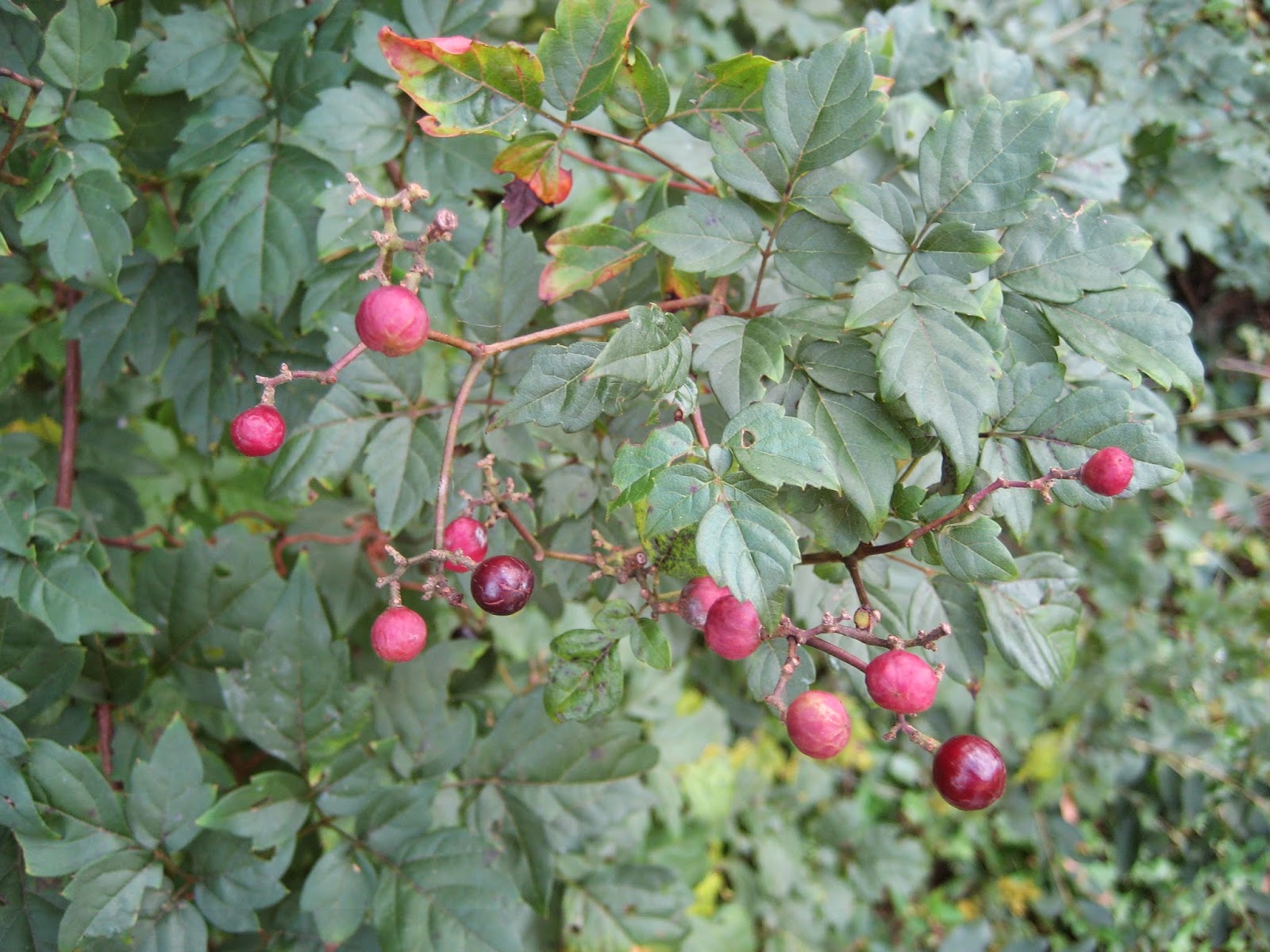
Peppervine (Ampelopsis arborea)

I found this while at the track with my son. The berries caught my eye and I don't remember seeing any of these in my neighborhood before. It's native from Florida to Virginia to Illinois and to New Mexico. There seems to be some confusion when reading different opinions as to Peppervine being edible. The berries are said to contain calcium oxalate. If you happened to read my blog about Virginia Creeper (Parthenocissus Quinquefolia) you might remember that calcium oxalate is described like a microscopic chemical spine from a cactus. Eating Peppervine berries could be like a chemical burn in your throat. Believe me I've come in contact with oxalate crystals from Virginia Creeper and it's like being tortured! Maybe it has been compared to having Poison Ivy or Poison Oak but in my opinion much worse! So how can some information show berries to be edible? Some have suggested there are only low levels of the oxalate crystals. Others say cooking could help remove them. As for me no thank you and not edible !  Another plant I've become informed about and one I'll keep my distance from. Take time and discover God's creation where you are. There is so much to learn. 


Peppervine (Ampelopsis arborea) leaves. 

Add captionPeppervine (Ampelopsis arborea)
Peppervine (Ampelopsis arborea)
 
Peppervine (Ampelopsis arborea)

Tuesday, October 7, 2014

Red Clover - Purple Clover (Trifolium praetenser)

This clover was at a walking track my son and I went to. My son jogged but I walked and took pictures of wildflowers and butterflies. It doesn't grow in my yard but white clover does which I have tasted. It can be found throughout the world and is native to Europe, Western Asia and Northwest Africa. It is found throughout North America but was introduced here by colonists in the late  1700's. In 1895 it became the state flower of Vermont. Purple clover is edible and said to be medicinal. It is a common food for cattle but can be another edible for us that many would never realize. The leaves or flowers could be put in salads or teas. In traditional Chinese medicine it has been used for colds and a blood purifier. The Native Americans used it as a salve for burns and for treating bronchial problems. Other cultures used it for treating whopping cough, respiratory problems, psoriasis, eczema and also cancer. It has also been used externally as a poultice for treating athletes foot and cancerous growths.  As with any plant be well informed, have plenty of references and expert advice before using medically. Always be aware of any risks or allergic reactions that could occur when used as an edible or medicinal plant. I can't forget to mention that some butterflies will visit the flowers and caterpillars of  Common Sulphur and Eastern Tailed Blue eat this clover. More interesting information and discoveries for me about a common sight near where I live. Take time and discover God's creation and what a great Creator made it all. 
Red Clover (Purple Clover) Trifolium praetense

Red Clover (Purple Clover) Trifolium praetense

Red Clover (Purple Clover) Trifolium praetense

Red Clover (Purple Clover) Trifolium praetense

Red Clover (Purple Clover) Trifolium praetense