Sunday, September 7, 2014

Late Purple Aster, Spreading Aster - (Symphyotrichum patens)

Amazing what new flowers just a day or two may bring. I went back down the hill in our neighborhood to discover Late Purple Aster blooming. It's eye-catching when the sun is shining on it. It's native to the Eastern and the southeastern United States. Some Asters have been and are used medicinally. As for Late Purple Aster specifically I couldn't find any information about it being used medicinally or being edible. I'm interested in more information about it as with many other wildflowers and weeds I find. So I will continue to discover and learn what God has placed near me. I hope you will take some time to discover God's creation where you are. 
Late Purple Aster, Spreading Aster - (Symphyotrichum patens)

Late Purple Aster, Spreading Aster - (Symphyotrichum patens)

Late Purple Aster, Spreading Aster - (Symphyotrichum patens)

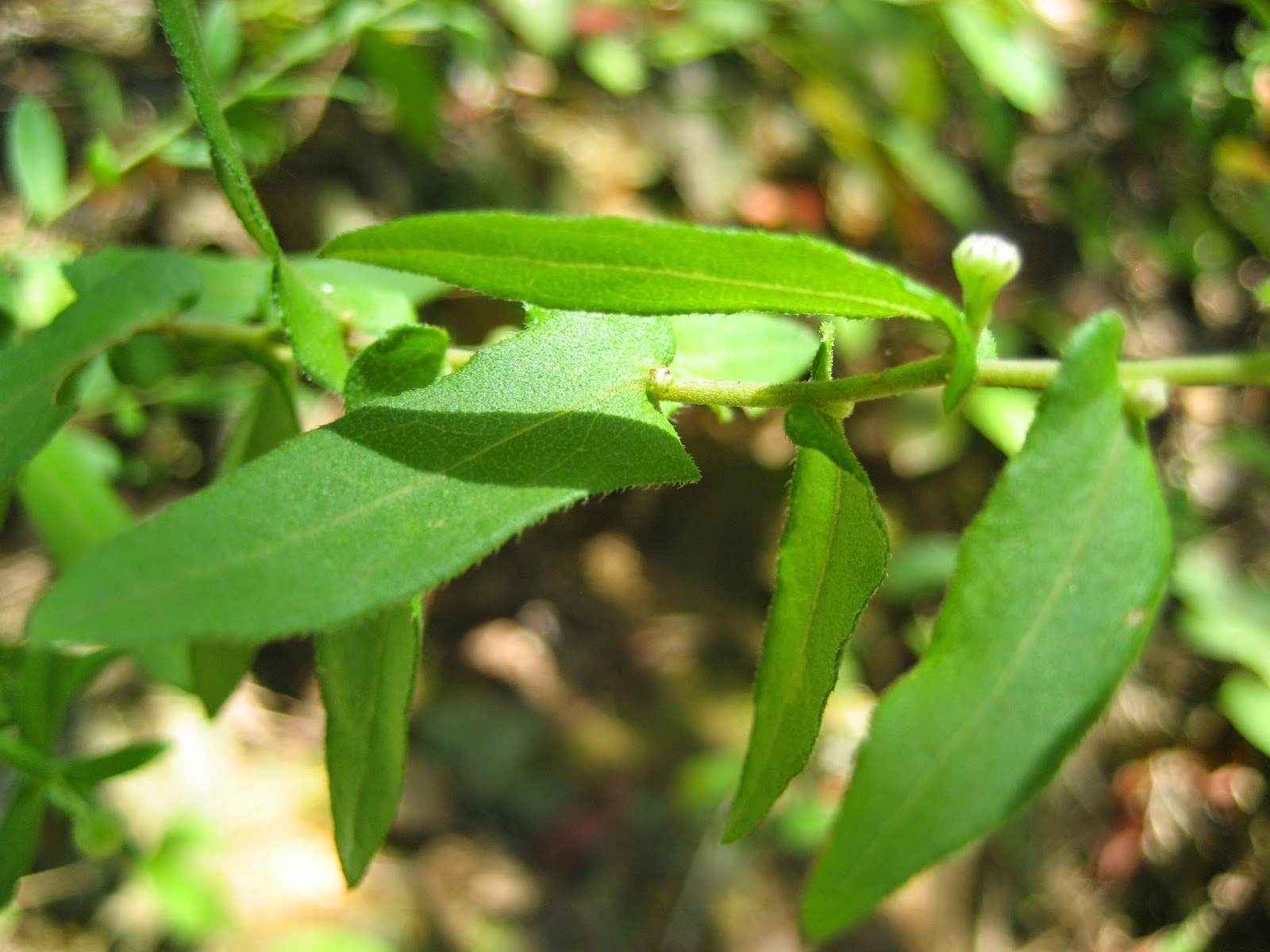
Late Purple Aster, Spreading Aster - (Symphyotrichum patens) leaves . 

Late Purple Aster, Spreading Aster - (Symphyotrichum patens)

Late Purple Aster, Spreading Aster - (Symphyotrichum patens)


Late Purple Aster, Spreading Aster - (Symphyotrichum patens)

Late Purple Aster, Spreading Aster - (Symphyotrichum patens)

Saturday, September 6, 2014

Cardinal Flower, Scarlet Lobelia - (Lobelia cardinalis)

I loved the discovery made by my son of this beautiful red Cardinal Flower. They are growing in a stream that flows into the creek . This stream could probably be seen from our backyard if there weren't so many trees to obstruct the view. It's at a distance but not far from here. Cardinal Flower is native to much of the United States and some of Canada. It also can be found in Mexico, Central America to northern Columbia. The Cardinal Flower attracts butterflies and hummingbirds. It's a good plant for wetlands and very moist areas. The flower colors can also be pink and white. The plant was considered medicinal by the North American Indians and teas from the roots were used for various conditions. WARNING it does contain poisonous alkaloids and all parts are considered to be poisonous. The toxicity is said to occur from large quantities though. The red Cardinal Flower is yet another discovery that I knew nothing of but had probably been near here quite some time. Look around and see God's creation near you . 


Cardinal Flower, Scarlet Lobelia - (Lobelia cardinalis)

Cardinal Flower, Scarlet Lobelia - (Lobelia cardinalis)


Cardinal Flower, Scarlet Lobelia - (Lobelia cardinalis)


Cardinal Flower, Scarlet Lobelia - (Lobelia cardinalis)

Cardinal Flower, Scarlet Lobelia - (Lobelia cardinalis)

Cardinal Flower, Scarlet Lobelia - (Lobelia cardinalis)

Cardinal Flower, Scarlet Lobelia - (Lobelia cardinalis)

Friday, September 5, 2014

Small White Morning Glory - Whitestar Potato (Ipomoea lacunosa)

At first looking up information about the Whitestar Potato or Small Morning Glory was a bit confusing because they are normally white. Finally I discovered that on occasions they are light purple or pink and the ones I found are light purple as you see. Until this year I never knew Morning Glories could be so small. The pictures I took are enlarged to view better and to see the star pattern on the flowers. They can be found throughout a large portion of the United States and some of Canada.  The American Indians in Central and Eastern North America and also California would eat the cooked root of this plant. Be warned though you can not eat most Morning Glories and the seeds contain small quantities of the hallucinogen LSD ! Always have the advice of experts if interested in wild edibles or medicinal plants. It's been a blessing to discover so many wildflowers this summer and so many that are new to me. I hope you'll take a look around and discover God's creation around you.
Small White Morning Glory - Whitestar Potato (Ipomoea lacunosa)

Small White Morning Glory - Whitestar Potato (Ipomoea lacunosa)

Small White Morning Glory - Whitestar Potato leaves (Ipomoea lacunosa)

Small White Morning Glory - Whitestar Potato (Ipomoea lacunosa)

Small White Morning Glory - Whitestar Potato (Ipomoea lacunosa)

Thursday, September 4, 2014

Panicledleaf Ticktrefoil (Desmodium paniculatum)

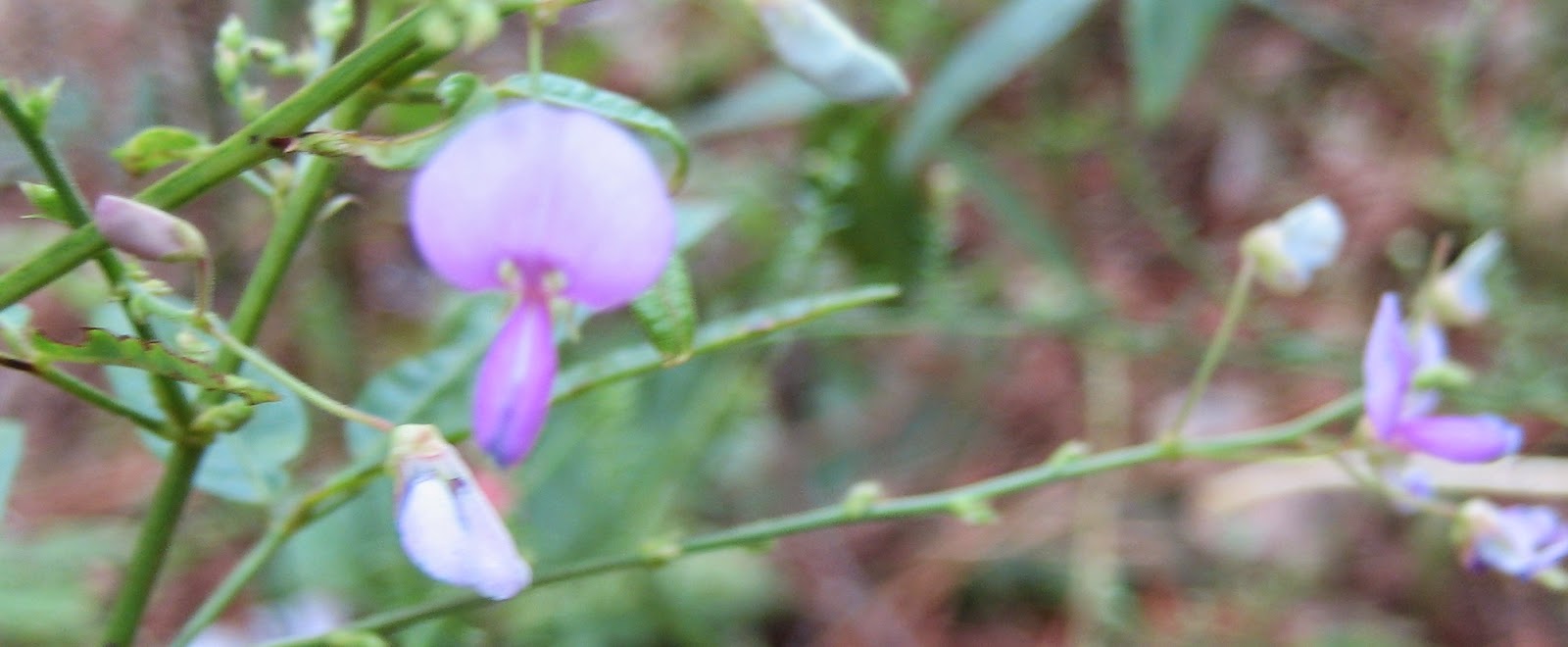
Panicledleaf Tick Trefoils was a little harder to get pictures of than some wildflowers I photograph. It took a few days of walking down the hill in our neighborhood and hoping the lighting and camera would both do their job. Unfortunately I couldn't get a very clear picture.  Tall, thin and leafy with a few small flowers on top is my description of Tick Trefoils. It can grow to three foot tall and these were pretty close to that. I don't think I remember seeing it before, at least not in my yard anyway. It was close to another flower I was taking pictures of and this spot and the one across from it have made for an interesting summer of discoveries. Just when I think I've photographed and written about them all then new and different flowers seem to bloom. The roots of Tick Trefoils have been used medicinally in the past by the Houma Indians. It's a food source for birds and butterflies but seeds nor any other part is edible for humans. It contains chemicals that are said to repel insects and boy do we need that in my neighborhood !  It's native to much of the United States and some of Canada. A nice wildflower discovery added to my list of others that I've found in my area. Hope you'll take time to discover God's creation where you are. 

Tick Trefoils (Desmodium paniculatum) 

Tick Trefoils (Desmodium paniculatum)

Tick Trefoils (Desmodium paniculatum) 

Tick Trefoils leaves (Desmodium paniculatum) 
Tick Trefoils (Desmodium paniculatum) 

Tick Trefoils (Desmodium paniculatum) 

Wednesday, September 3, 2014

Fernleaf Yellow False Foxglove (Aureolaria pedicularia)

This year I have found a lot of yellow wildflowers growing here and maybe some have been here for years but I didn't notice them . Fernleaf  Yellow False Foxglove is growing on a little bit of a wooded hillside in my neighborhood. It's actually on the opposite side of the weed patch where I've found so many other wildflowers. They are said to be never far from oaks and typically white oaks. They parasitize the roots and obtain water and nutrients from them. This plant is native to the Eastern United States and parts of Canada. In the past Native Americans did have a medicinal use for it but the only thing I've found is an emetic. In other words used to induce vomiting. If that's the case then I'd say a definite No to edible ! I wasn't able to find much information on this one and maybe there's more yet to be learned. I'm still making discoveries of what God has placed near me and I hope you'll find the time to discover God's creation near you .


Fernleaf Yellow False Foxglove (Aureolaria pedicularia)

Fernleaf Yellow False Foxglove (Aureolaria pedicularia)

Fernleaf Yellow False Foxglove (Aureolaria pedicularia)


Fernleaf Yellow False Foxglove (Aureolaria pedicularia)


Fernleaf Yellow False Foxglove (Aureolaria pedicularia)

Fernleaf Yellow False Foxglove (Aureolaria pedicularia)

Fernleaf Yellow False Foxglove (Aureolaria pedicularia)

Tuesday, September 2, 2014

Narrowleaf plantain (Plantago lanceolata)

Most would look at Narrowleaf plantain and think that's a weed right? That might be true but one with a lot of benefits. I've seen plantain all my life and never knew it's name until recently. It would do us all good to know just what we're walking on. Maybe you've been pulling it up or in many cases people are spraying poison on it. Narrowleaf plantain can be found throughout the United States, Canada, Iceland, Europe,Spain and northern and central Asia . The genus Plantago consists of about 250 species worldwide and 16 of those can be found in California. Broadleaf plantain and Narrowleaf plantain were introduced here from Europe. It followed the settlements of Europeans and was called by some Native Americans 'White man's foot" . Plantain is edible and medicinal. Young leaves can be eaten in salads or as a potherb and also teas. The whole seeds have a laxative effect if eaten raw. Medicinal uses are : Antibacterial, antidote, astringent, demulcent, expectorant, haemostatic, laxative, ophthalmic and poultice. Parts used are leaves, roots and seeds. Some other uses for plantain are : as a dye, fiber and a starch. Amazing uses for a plant many might not want around. It also is said to contain vitamins : A, C and K and also calcium. Much information can be found if interested in this plant and it's uses. My blogs are only here for sharing the information I've learned and pictures I enjoy taking of plants. I'm not here to give medical advice. I love learning about God's creation and I hope you'll take time to discover what God has placed near you.
Narrowleaf plantain (Plantago lanceolata)

Narrowleaf plantain (Plantago lanceolata)

Narrowleaf plantain (Plantago lanceolata)

Narrowleaf plantain (Plantago lanceolata)

Narrowleaf plantain (Plantago lanceolata)

Monday, September 1, 2014

Giant Ironweed-Tall Ironweed (Vernonia gigantea) (Vernonia altissima)

When I caught a glimpse of this while driving I thought the purple flowers were beautiful. Tall and I guess weedy looking as the name says but yet I think beautiful. Giant Ironweed can grow up to 9 feet. I'm glad the ones we found were not that tall. It made it a little easier to take pictures of.  It can be found in much of the eastern half of the United States, up to southern Canada and and also to Puerto Rico. This is one that the bees and butterflies love and some were around when we were taking pictures of it. It's said to be medicinal and one species was used by the Native Americans to relieve pain after childbirth, bleeding and stomachaches.  I haven't found any information for uses of Vernonia gigantea presently although the 17 species of Vernonia found in North America are all said to have the properties as a blood purifier. They contain sesquiterpene lactone which help to prevent atherosclerosis, meaning prevents plaque build up in the arteries. I'm just passing on information here and would love to hear from anyone with more knowledge and facts about this and uses of this plant. As always find a trusted expert in these areas and seek their advice if interested in the medicinal use of any plant. I'm discovering more and more about God's awesome creation. I hope you will also. 


Giant Ironweed (Vernonia gigantea)
Giant Ironweed-Tall Ironweed (Vernonia gigantea) (Vernonia altissima) 


Giant Ironweed (Vernonia gigantea)

Giant Ironweed (Vernonia gigantea)

Giant Ironweed (Vernonia gigantea)

Giant Ironweed (Vernonia gigantea)

Giant Ironweed (Vernonia gigantea)

Giant Ironweed (Vernonia gigantea)
Giant Ironweed-Tall Ironweed (Vernonia gigantea) (Vernonia altissima) 

Giant Ironweed-Tall Ironweed (Vernonia gigantea) (Vernonia altissima)